Bubble Pop Origin! Puzzle Game
- 4.7
- Rating
- 10.00M
- Installs
- Free
- Price
 Analysis by App-foxy
I spent time with Bubble Pop Origin! Puzzle Game as a casual puzzle player, paying particular attention to how comfortably it works in different situations and for people with different needs. It is a bubble-shooting game from Puzzle1Studio, free to start, rated for Everyone, and built around a very familiar idea: aim a colored bubble, match groups, clear the board, and move through a long series of stages. That simplicity is its greatest strength, but it also means the experience depends heavily on how well you can see the board, control a shot, and tolerate the game’s repeated visual rhythm.
The game has a 4.7 average from around 186 thousand ratings, with more than 10 million installs. Those figures make sense to me after playing it: this is not a difficult game to understand, and I could begin a level without reading a manual or learning a complicated control scheme. At the same time, its huge amount of content can make the experience feel more like a long-term habit than a short puzzle collection. I would recommend it to someone who wants quick, low-pressure sessions, but I would not present it as a deep strategy game or as a universally comfortable choice for every player.
How clearly the game communicates what to do
I find the game’s clearest strength is how quickly it tells me what kind of puzzle I’m facing: inspect the bubbles, choose a route, and make a deliberate shot. That clarity is useful when I only have a moment to play, but it does not make every move obvious. Next, I’ll look at how that simple loop feels in practice, especially when a level calls for patience rather than a quick reaction.
You May Also Like

 Pandora - Music & Podcasts
Pandora’s Music Is Easy to Start, but Harder to Recover
Pandora’s strength is its low-effort path from a seed to a station. Its weak spot is how much confidence it asks you to place in connection, setup, and quiet recovery.

 AccuWeather: Weather Radar
AccuWeather Review: A Quick, Clear Forecast for Everyday Decisions
For everyday plans, the best forecast is the one you can understand quickly. AccuWeather makes rain timing, radar, and local conditions easy to act on, with a few trade-offs.

 Hill Climb Racing
Why Hill Climb Racing Still Turns Crashes Into One More Run
A tiny car, a bumpy hill and one more upgrade: Hill Climb Racing keeps resurfacing because its simple chaos makes every near-miss feel personal.

 AliExpress - Shopping App
AliExpress Makes Global Shopping Feel Personal, but Shoppers Bear the Risk
AliExpress turns a global marketplace into a pocket-sized discovery engine. Its reach is useful, its shopping loop compelling, and its trade-offs easy to miss.

 Lords Mobile: Kingdom Wars
Lords Mobile Is a Kingdom-Building Routine, Not a Quick Match
A case-by-case verdict on the building, battles, device demands, and social commitments that make Lords Mobile rewarding for some players and exhausting for others.

 PDF Scanner app - TapScanner
TapScanner Makes Paperwork Easier to Capture, Check, and Share
TapScanner makes scanning with a phone feel less like a rescue operation and more like a dependable step in getting work done. Its capture tools are useful, though not flawless.
More From Our News Desk
View All News


Readability and navigation
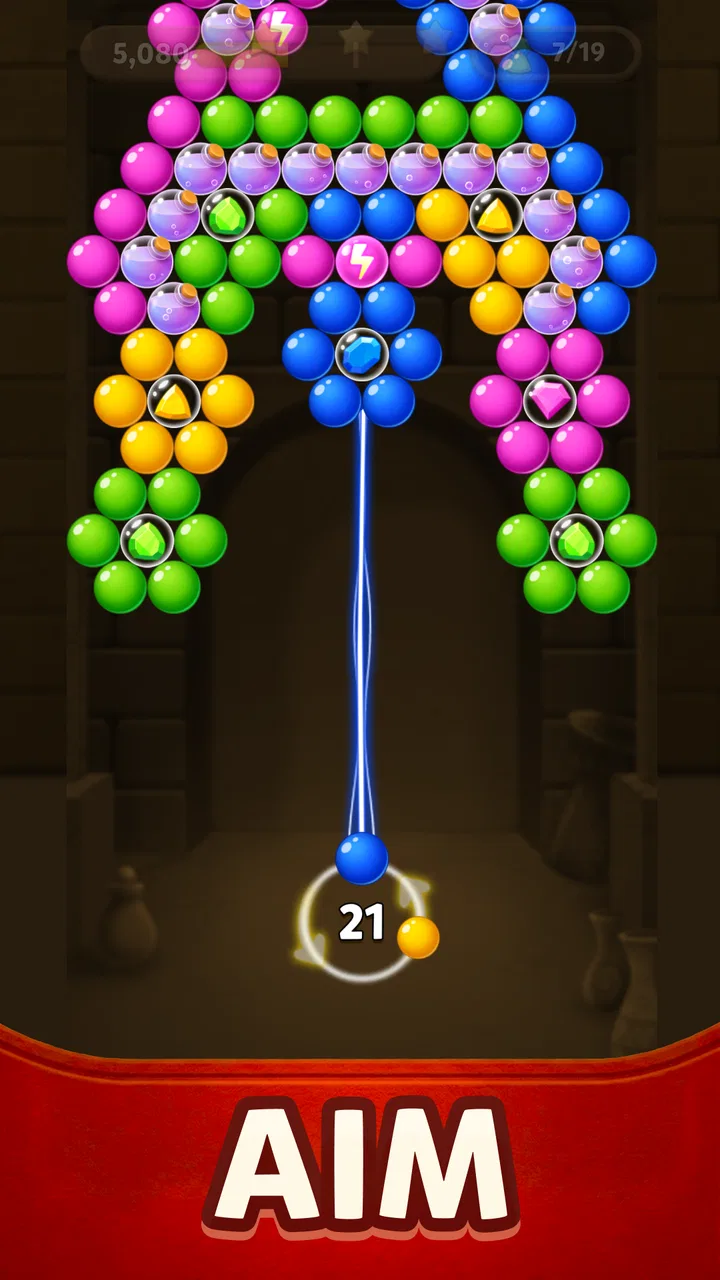
The central play area is easy to understand because the visual language is direct. The bubbles are the important objects, the launcher gives a clear sense of direction, and the goal is visible rather than hidden behind menus. For a first-time player, that matters more than elaborate tutorials. I found that I could usually identify the next useful move quickly, especially in the early stages, without stopping to decode unfamiliar symbols.
The level-based structure also helps with orientation. Instead of asking me to remember a large set of rules, it presents one small challenge at a time. That makes the game approachable for children, older players, and anyone who prefers learning by doing. The Everyone age rating fits that gentle presentation, although a rating alone does not mean every person will find the colors, movement, or pace comfortable.
Navigation is strongest when I am focused on the current puzzle. The game’s basic loop keeps attention in one place: inspect the arrangement, choose an angle, and fire. That focus reduces the mental load found in more crowded puzzle games with several currencies, character screens, inventories, and competing objectives. If you want a game that can be opened for a short break without first reconstructing a complicated storyline, this is a good fit.
There is a useful difference between understanding a level and solving it well. The first part is accessible because the objective is obvious. The second can become less forgiving when a shot needs to pass through a narrow gap or bounce from a wall. I sometimes knew exactly which cluster I wanted to reach but still had to judge the angle carefully. That makes the game more engaging than a simple tap-to-match title, though it can also expose difficulties for players who have trouble with precise visual tracking.
The developer is Puzzle1Studio, and the game has been available since late November of 2019. Its current version is 2617.1.0, which signals a mature, continuously maintained title rather than a small experimental release. I would still judge the experience by the actual play loop rather than by its age: the important question is whether you enjoy aiming and clearing bubbles repeatedly, because that remains the reason to stay.
Color, contrast, and visual workload
Color is central to recognizing matches, so the game asks players to distinguish bubble types quickly. I found the board readable when I was looking at it directly, but players with color-vision differences may need more time or may find some combinations harder to separate. I would not assume that the game’s bright palette solves that problem. If matching similar shades is tiring or unreliable for you, this is one of the first things to consider before committing to a long session.
The board can also become visually busy as more bubbles, obstacles, and possible routes appear. Even when the rules remain simple, the number of choices can make a level feel crowded. My practical advice is to pause before firing rather than treating every turn as a reflex action. Looking first at the lower structure, then at the reachable clusters above it, makes the board easier to parse and reduces wasted shots.
That pause-and-plan habit is especially useful for players who process visual information more slowly. The game does not require constant rapid tapping in the way an action title might, so it can support a calmer pace. However, the pressure comes from limited opportunities and the desire to avoid mistakes, not from fast enemies. A player who needs extra time may still feel tension if a level’s layout makes every shot feel expensive.
I also found that screen size affects comfort. On a larger phone or tablet, the bubble arrangement is easier to inspect and aiming feels less cramped. On a smaller display, the same puzzle can demand more concentration because the target areas occupy less physical space. That is not a special setting or a guaranteed compatibility feature; it is simply a practical difference I noticed when thinking about who will find the game comfortable.
Controls and motor demands
The control idea is straightforward: position the aim and release a shot. That is much less demanding than a game requiring several simultaneous buttons, rapid swipes, or complicated gestures. For people who prefer simple controls, this is a meaningful advantage. I could play with one hand during a short break, although I was more accurate when I held the phone steadily with both hands.
Precision is still part of the challenge. A small change in angle can send a bubble toward a different group, particularly when a bank shot is needed. Players with limited fine-motor control, hand tremors, or difficulty maintaining a steady touch may find the aiming stage frustrating even though the interface itself is not complicated. The game’s simplicity should not be confused with effortless control.
A helpful approach is to treat each shot as a deliberate action rather than repeatedly correcting the aim at the last moment. I also recommend playing with the device supported on a table or against a cushion if holding it for a long time is uncomfortable. That does not change the software, but it can reduce the physical effort required to keep the target steady.
The game suits people who want a puzzle they can stop and resume mentally without memorizing a story. It is less suitable for someone looking for a completely passive experience. You still need to choose angles, notice patterns, and make decisions. If your preferred casual game is based on tapping obvious matches with almost no aiming, a conventional match-three title may feel more forgiving.
Sound, attention, and sensory comfort
Bubble-popping games naturally rely on repeated visual and tactile feedback, and this one follows that familiar rhythm. I found the feedback satisfying during short sessions, but repetition can become tiring when I played for too long. Players who are sensitive to recurring effects may prefer to keep sessions brief or use the device’s normal audio controls to create a quieter environment.
This is also a game that can pull attention toward the screen even when the rules are simple. A level may look like a two-minute distraction, then invite another attempt because the previous shot almost worked. That is useful during a commute or waiting period, but less helpful when you need to remain aware of your surroundings. I would not play it while walking, crossing a road, or handling anything that requires full attention.
For a child, the clear objective and Everyone rating make it easy to understand, but the number of stages and optional spending deserve adult awareness. The game is free to download and includes in-app purchases ranging from $0.99 to $99.99 per item. That range is important for families: the core entry cost is low, but a free starting point does not automatically mean every later choice is free.
Using it in everyday situations
For everyday play, I think the key is matching the session to the moment: a quiet wait or a stretch of offline travel suits this self-contained puzzle better than a setting where I need to stay alert to other things. I also find it easier to enjoy when I pause between shots and stop before repetition turns into autopilot. The next section considers which routines make that balance work.
Short breaks, travel, and offline play
One of the most practical strengths is that the game is designed for interruptions. I could finish a small piece of progress, put the phone away, and return later without needing to remember a complex plot. The ability to play offline makes it particularly useful on a flight, in a weak-signal area, or during a commute where connectivity is unreliable. I would still prepare the game before leaving home rather than discovering during travel that an update or device issue needs attention.
Imagine waiting at a clinic while your phone is in low-power mode and the surrounding room is quiet. A bubble puzzle can fill ten minutes without demanding conversation, a network connection, or a long setup. That is where this game feels most natural. It gives the mind a small task, and the individual levels make it easy to stop when your name is called.
Offline play also changes how I think about the game’s value. It is not dependent on being part of a live competitive community, so someone who wants a private puzzle routine can enjoy it without following events or checking in constantly. On the other hand, players who need social competition, detailed leaderboards, or a strong narrative reason to continue may find the experience thin compared with other puzzle games.
How to play more comfortably
I found three habits particularly useful. First, I inspect the board from the bottom upward before choosing a target. Clearing a lower support can change several bubbles at once, while attacking a tempting upper group may leave the structure intact. Second, I save unusual angles for moments when a direct shot would waste a turn. Third, I stop after a frustrating run rather than immediately paying or replaying out of irritation. A short break often improves judgment more than another hurried attempt.
These habits are not merely ways to improve a score. They also make the game more inclusive because they reduce the need for rushed decisions. Someone who needs additional processing time can turn the puzzle into a sequence of observations rather than a contest against reflexes. The trade-off is that careful play takes patience, and not every stage rewards the same plan.
I would also keep the phone at a comfortable viewing distance and avoid playing in glare. Reflections make similar bubble colors harder to compare, and squinting quickly turns a relaxing activity into visual work. If you use the game as a bedtime distraction, remember that the bright screen may be less comfortable than an audio-only activity. The game can be quiet and self-contained, but it is still screen-based.
Who will enjoy the long progression
The store summary points to more than 9,000 levels, which is an enormous amount of material for a free casual puzzle. I see that as both a benefit and a warning. It is excellent for someone who wants a dependable game to revisit over months, because there is no immediate shortage of stages. It can feel overwhelming, though, if you prefer a short, curated experience with a clear ending.
The long progression works well for routine players. You can use a few levels as a morning warm-up, a quiet break between tasks, or a low-stakes way to occupy your hands while waiting. It is less compelling for players who need constant novelty. Even with changing layouts, the essential action remains bubble aiming and matching, so the appeal depends on whether that loop stays satisfying for you.
The large install base and strong average rating suggest that many people find the formula approachable, but popularity should not decide the purchase for you. I would pay more attention to your tolerance for repetition and your comfort with color-based visual puzzles. A game can be well liked and still be the wrong choice for someone who wants story, music-driven play, or more varied mechanics.
Where it sits beside other puzzle options
Compared with match-three games, this title gives me more control over the result of each move. I am not simply selecting adjacent pieces; I am judging a trajectory and deciding whether to create a chain reaction. That extra control makes successful shots feel earned. Match-three alternatives may be better if you prefer quick pattern recognition, shorter decision cycles, or boards that do not depend as much on aiming accuracy.
Compared with physics-heavy puzzle games, Bubble Pop Origin! Puzzle Game is easier to enter but usually offers less experimentation. The goal is familiar, and the feedback is immediate. A physics game may reward unusual solutions and produce more surprising failures, while this one is better when I want a predictable, repeatable structure. Neither approach is superior; they serve different moods.
It also differs from narrative puzzle adventures. There is no need to follow dialogue or remember characters to understand the next challenge. That makes it more accessible in a noisy waiting room or during a fragmented day, but it removes the emotional motivation that keeps me playing story-led games. If you want puzzles to carry a plot, I would choose an adventure-puzzle alternative instead.
Limits that matter before installing
The biggest barrier is the reliance on visual color matching. Players with color-vision differences, low vision, or visual fatigue should approach carefully and test whether the bubbles remain distinguishable on their own screen. I would not recommend assuming that a bright design is automatically readable. The same colorful presentation that feels cheerful to one player can be tiring or ambiguous to another.
The second barrier is precision. Simple controls are helpful, but narrow angles and bank shots can still demand steady movement. If touch accuracy is a serious concern, an alternative with larger tap targets and no trajectory control may be kinder. This game is most comfortable for players who can make small adjustments and are willing to slow down.
The third is monetization pressure. The game costs nothing to start, but the presence of optional purchases means families and players who are sensitive to spending prompts should establish their own boundaries. I would treat purchases as a convenience rather than part of the basic reason to install the game. If you strongly prefer one-time paid games with no purchase decisions, this free-to-start model may not match your expectations.
Finally, the sheer length can become a form of friction. Thousands of levels sound generous, yet a large progression can encourage automatic play without much reflection. I enjoyed it more when I used it intentionally for short sessions instead of letting it become background tapping. Players seeking a compact puzzle with a definite conclusion should look elsewhere.
My inclusive verdict
I come away viewing this as a friendly, easy-to-learn bubble puzzle with unusually strong situational flexibility. The offline option, short-level structure, and uncomplicated objective make it useful for travel, waiting rooms, and quiet breaks. Its design can support players who prefer a calm pace and a limited control set, especially when the phone is held steadily and the screen is easy to read.
That support has clear boundaries. The game does not remove the need to distinguish colors, follow small visual details, or make accurate aiming movements. Those demands may exclude or frustrate some players, and the repeated effects may not suit people with sensory sensitivities. I would also be cautious about recommending it to children without discussing in-app purchases, even though the content rating is Everyone.
For me, the best reason to install it is dependable, offline-friendly puzzle play rather than innovation. Puzzle1Studio has built a game that is immediately understandable and broad enough to become a regular companion. The current version is 2617.1.0, and the long-running format gives it plenty of staying power, but the core experience remains intentionally narrow.
My recommendation is simple: choose it if you enjoy colorful aiming puzzles, want something that works well in short sessions, and appreciate having a very large progression to explore. Skip it if precise touch control, color separation, repeated visual effects, or free-to-start purchases are likely to create stress. In the right setting, it is a pleasant little routine; for players needing strong accessibility customization or richer variety, a different puzzle style will be the better fit.
FAQs for Bubble Pop Origin! Puzzle Game
01What is Bubble Pop Origin! Puzzle Game?
Bubble Pop Origin! Puzzle Game is a colorful bubble-shooting puzzle game for Android and iOS. You aim and launch bubbles to match three or more of the same color, clear formations, and complete level objectives. It combines classic match-and-shoot gameplay with a progression map, boosters, special bubbles, and increasingly challenging stages designed for short or extended play sessions.
02Can Bubble Pop Origin! Puzzle Game be played offline?
Many of the game’s basic puzzle levels can generally be played without a continuous internet connection, which makes it convenient for travel or quick offline sessions. However, online access may be required for advertisements, cloud progress, special events, leaderboards, updates, and certain rewards. Availability can vary by device and version, so connecting occasionally is recommended.
03Is Bubble Pop Origin! Puzzle Game free to download and play?
Yes, Bubble Pop Origin! Puzzle Game is typically free to download and offers free gameplay. It may include optional in-app purchases for coins, boosters, extra lives, or other helpful items. Advertising can also be part of the free experience. You can progress without spending money, although difficult levels and limited resources may encourage optional purchases.
04Does the game contain ads or in-app purchases?
The game may display advertisements between levels or when you choose to claim optional rewards, such as extra moves, lives, or boosters. It can also offer in-app purchases for premium currency and gameplay items. Before downloading, parents and users should review the store listing and device purchase settings, especially if children will be playing.
05What are the main features and challenges in the game?
Bubble Pop Origin! Puzzle Game focuses on simple controls, bright visuals, and progressively harder levels. Players usually need to plan bank shots, match colors accurately, use walls to reach difficult areas, and activate special bubbles or boosters at the right moment. The challenge comes from limited shots, obstacles, changing layouts, and objectives that require more than simply clearing bubbles.
Pros
- Simple tap-to-shoot controls are easy for players of all ages.
- Short levels make it convenient for quick gaming sessions.
- Colorful visuals and playful effects create an inviting presentation.
- Power-ups add variety and help break through difficult bubble layouts.
- Offline play is useful when you have no reliable internet connection.
Cons
- Later stages can become repetitive once the main mechanics are mastered.
- Some levels may feel heavily dependent on lucky bubble colors.
- Extra moves and boosters can encourage in-app purchases.
- The small play area may feel cramped on phones with compact screens.
- Frequent rewards and pop-ups can interrupt the flow between levels.

Bubble Pop Origin! Puzzle Game
Gallery